Pages

Saturday, October 14, 2017

7 Days in Western Washington

Mike and I try to get away on a "race free" vacation at least once a year just to relax and try something new.  Of course, our idea of relaxing is doing as much as we can in as short a time as possible, but for fellow adventurers, I would definitely recommend our trip this fall to Washington.  The weather was fantastic, the scenery breath taking, and the mix of ocean, mountains, urban, and remote is not something that we find often.  Without further ado, here is our itinerary for 7 days of exploring the Pacific Northwest!


Day 1: North Cascades National Park

We flew into Seattle after work and stayed with family, but this could easily be done by arriving in the morning and heading out to the Cascades.  Anytime spent in the North Cascades must involve a hike, so we chose Mount Dickerman.  It technically is in the Mt. Baker-Snoqualmie National Forest (you need a Northwest Trail Pass for your car), which is outside of the North Cascades National Park boundaries, but is less than two hours drive from Seattle.  The hike is roughly 8 miles round trip and is steep! 
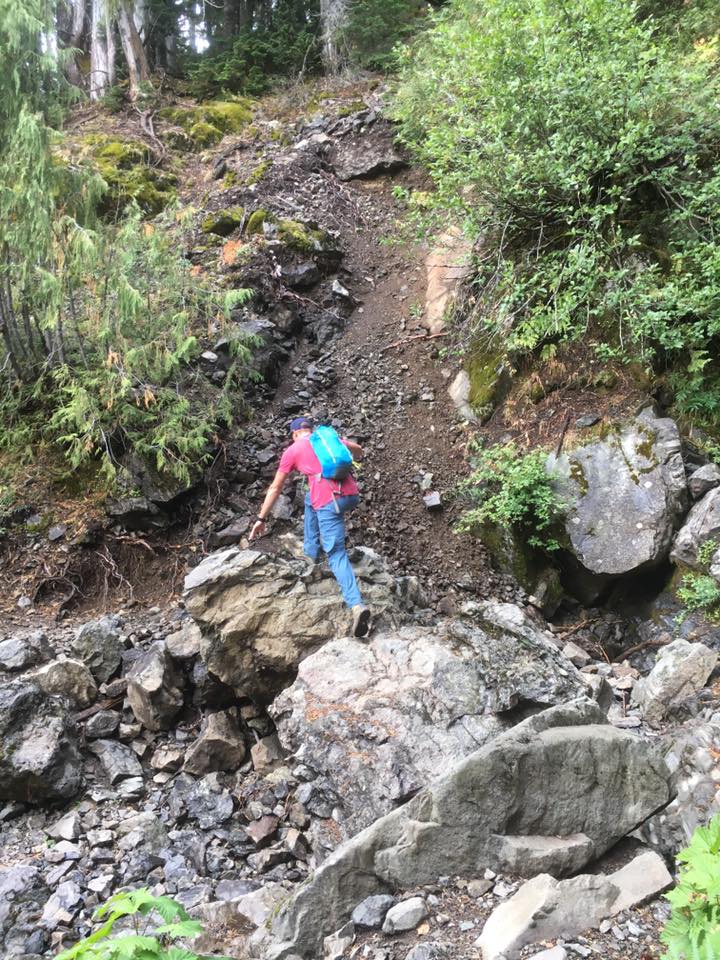


The trail starts low in the forest, filled with beautiful moss and ferns.  About two miles from the trail head you pop out into more alpine terrain, full of blueberries and little rodents called pikas.  The first snow of the year had already hit the Cascades, so the last mile of our ascent was full covered in a white blanket. 


This was the only day of our trip that had any rain, or cloud cover, so when we reached the summit we couldn't see the full views of the major Cascade peaks that we were promised, but the hike was so beautiful that we didn't care.  Overall this hike was a 4/5


After coming back down we checked out Mondo's for burgers and beer in Marblemount, then did a driving tour of the National Park before the sunset.  Oddly, every parks visitor center that we passed was closed, so we really enjoyed the pull-offs on the parks road explaining the geology, and pointing out the different peaks in the range.  Diablo Lake provides the classic view of the park, so we made sure to check out that overlook before calling it a night. 


 Day 2: North Cascades to Deception Pass

We woke up the morning after Mount Dickerman and were really sore.  That is the longest hike we have done on anything so steep, and we decided to pick something a little less intense for our second North Cascades hike.  We found the 4 mile Sauk Mountain trail and set off.  Sauk Mountain is on the Eastern edge of North Cascades, with less elevation, but the benefit of providing a view of both Puget Sound (maybe even the Olympics) and the full Cascade range.  We hit the trail early hoping to beat the crowds and earn a clear view.  This hike was completely different from the previous one.  Even the trail head provided clear views of the surrounding mountains with basically no tree cover.  This made us feel really exposed on the narrow trail as it switch backed. One false move and we would tumble straight down to the valley.


The hike took us around the peak and over boulders in a small rock field.  Once we reached the peak, it was 360 views with Mt. Baker the most prominent peak on the horizon.


As we descended, the fog from the valley lifted, putting us in a cloud where we couldn't see more than a few feet in either direction.  Good thing we had an early start!  This way probably the best hike of the trip 5/5.


The shorter hike also gave us plenty of time to explore.  We headed west towards the San Juan archipelago, and stopped in Anacortes on Fidalgo Island for a sea kayak tour.  We spend 3 hours exploring the bay with seals, porpoises, ducks, and bull kelp.  This was definitely a relaxing way to spend the afternoon 4/5.


After cleaning up with hit Adrift restaurant for dinner, which was a little fancy for our tastes, so we checked out the local Brown Lantern bar to even things out before heading to Deception Pass and Whidbey Island.  Deception Pass is a very narrow channel between Fidalgo and Whidbey Islands that has very strong currents and tide.  We caught it just after the sun was setting, and while it didn't photograph well, we were really able to see the currents as we walked along the shoreline. 


Day 3: Olympic National Park

With two action packed days behind us, Mike and I decided to spend our first day viewing Olympic National Park on a road trip.  We took the ferry from Whidbey Island to Port Townsend, and then planned on a day of site seeing.  We drove the northern side of the park, and then headed down to the Hoh Rainforest to see the famous Hall of Mosses.  This is just a short 1 mile loop through the temperate rainforest.  One of the coolest parts of this area was the silence of the woods.  The trail had a reverent feel.  It wasn't the highlight of our trip, but it gave me an idea to do a hike through the center of Olympic National Park next time we make the trip 3/5. 


Next we went to the coast to see Rialto Beach.  My Aunt Justine often works on the Olympic Peninsula and recommended it as a favorite spot.  This did not disappoint.  The weather changed just a mile from the coast and turned cool and hazy, which made for stunning pictures.  Mike and I were the only ones on the beach that went in the water, but we had a blast skipping rocks, and chasing the waves.  Naturally, we left the beach soaking wet and full of smiles 5/5.


With more time to burn, we headed back to the northern part of the park and stopped at Crescent Lake to check out Marymere Falls.  Usually I am not much of a waterfall person, but we were enjoying our easy day of exploring, and decided to see all of the parks most popular sites.  I ended up enjoying this hike much more than I thought through the old growth forest.  The falls were tall, but delicate 4/5.


Finally we decided to head into town for dinner at the Next Door Gastropub in Port Angeles.  We really enjoyed the fun burgers (mine had beets and goat cheese, Mike's was a less adventurous beef & bleu), although I prefer the dive bar atmosphere more myself.  We stopped at Harbinger Winery on our way back to our cabin on Crescent Lake, and made it back in time to watch the sunset on the Olympics.

Day 4- Olympic National Park


The Olympic Peninsula has so much to see, so we decided to spend a second day exploring.  First, we went to Sol Duc Falls, which we had skipped the day before in favor of Marymere Falls.  After we had enjoyed walking through the forests so much that we decided to fit in the 1 1/2 mile loop.  The forest was beautiful, and the waterfall was nice. I preferred the hike to Sol Duc, but the falls at Marymere, although both were very enjoyable 4/5.


With most of the day still ahead of us, we drove to Hurricane Ridge to hike Hurricane Hill.  This 3 mile hike is one of the most popular in the park.  The animals in this area are pretty tame, and Mike enjoyed photographing the marmots and black tailed deer.
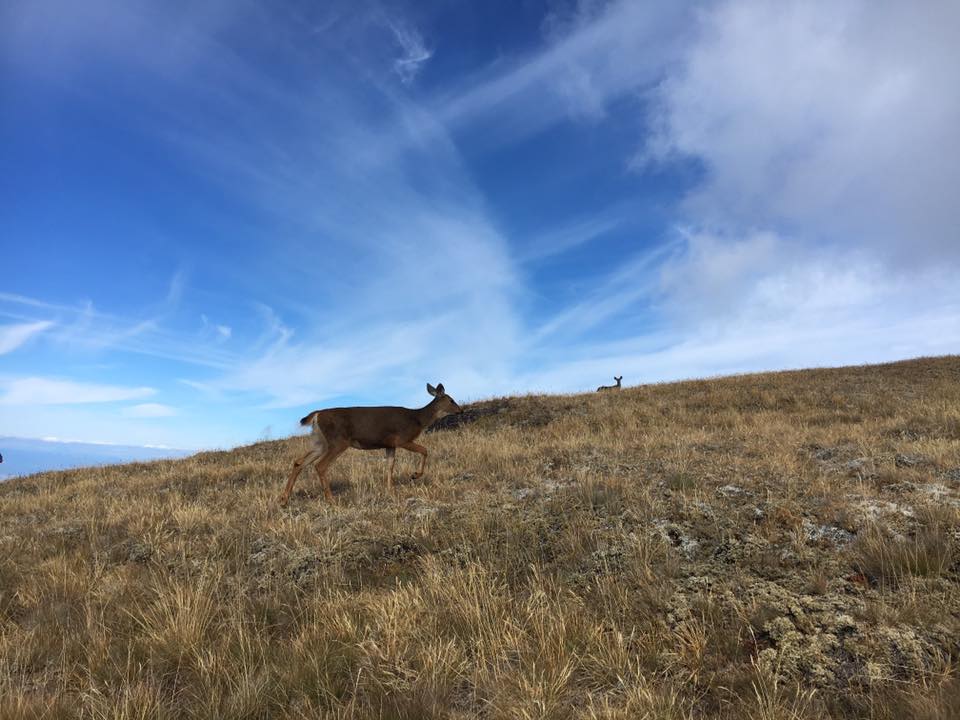

This hike gives huge views of the Olympic range from the top of a grassy ridge.  This was the only hike that we had to share the summit with other hikers over the entirety of the trip 4/5.


Next, we headed to where we were staying in Quilcene and had dinner at the 101 Brewery, one of two restaurants in town.  Quilcene is known for its oysters, but the restaurant was out, so we had burgers.  We went to the other restaurant, Timber Lodge, for dessert, and still having some time to kill, we drove to Finnriver Ciders and listened to some local bluegrass music.  A fun day, but we could have fit a bit more in without too much trouble.

Day 5- Mount. Ellinor & GAME DAY

The fifth day of the trip was a Sunday and that meant Mike had to watch the Lions.  Unfortunately, the Lions had a 1 PM EST game, which made it 10 AM in Washington.  I like the Lions, but I don't want to plan my vacation around them.  Mike was willing to miss the first half of the game, so I had until noon to do some exploring.  I chose a difficult hike that is one of the most popular on the Olympic Peninsula, Mount Ellinor.  This hike is 6 miles round trip and can get pretty busy, even though the last mile of the climb is pretty much a scramble up bare rock. 


 Having the game to watch got us out on the trail early, and we had the trail and the summit all to ourselves.  Similar to the Mount Dickerman hike we went about half way up in the woods, and then left the trees and entered the rock garden.  We really had fun picking our footing and scrambling up to the top.  We hiked quickly and worked up quite a sweat by the time we reached the top. 


The views were spectacular!  Both Mt. Baker and Mt. Rainier were in full view. 5/5  On the way down, we saw probably 30 people walking up, so our early morning start time was definitely a positive.


After getting back to the car with drove to Buffalo Wild Wings in Olympia as we knew this would have the game.  Mike thought he was having the best day ever, until the Lions managed to un-score a touchdown with time expiring and lost to the Falcons.  Oh well, at least it was exciting.  We drove back to Seattle and joined up with Uncle Greg, Aunt Justine, and Kendall for a dinner of Thai take-out.


Day 6- Seattle 

After 5 days on the road, we had Uncle Greg and Aunt Justine give us a tour of their city. First we stopped by the Ballard Locks, that connect Puget Sound to Lakes Union and Washington.  We didn't see any Salmon jumping, but we were able to see some boats move through.


Next, we hit my favorite spot in the city, Pike Place Market. The first stop was a cup of espresso, followed by a visit to the legendary gum wall.


 Afterwards we perused the market, look at ceramics, jewelry, art, spices, tea, dried cherries, and bought the fixings for dinner.  Once we had our fill of the market, we walked down to Pioneer Square and checked out the old architecture.  


After a quick nap, Uncle Greg took us out to Lake Washington in the surf skis.  Mike and Greg went K2 to start, and I went K1. After about 40 minutes I switched with Mike.  It was a really great experience, but we are not nearly as comfortablw in kayaks as we are in canoes!  For dinner Aunt Justine's brother Alex came over and Kendall joined us too, and we feasted on Salmon, Crab, and salad that we bought at the market.

Day 7- Mount Rainier National Park

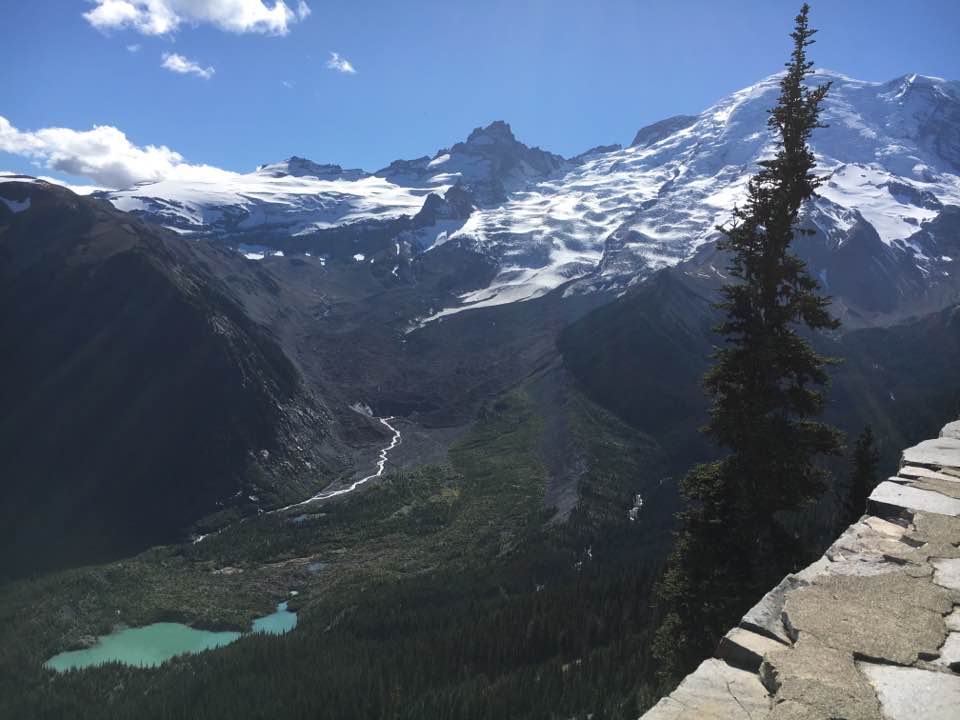
When planning the trip we decided to save a day at Mount Rainier for the end- the best for last.  Our whole trip was so good, that I just wasn't sure that Rainier could offer us anything more- but it was different than what we had seen in any other hikes and we loved it.  For this final day, Uncle Greg, and Aunt Justine, and fellow Michigander Ryan Harris joined us for our hike on the Burroughs Mountain.  


Burroughs is right next to Mount Rainier- so close that you can almost touch it.  There are three "burroughs" each offering a little closer view of Rainier.  We decided to hike to the furthest burrough, and hike a different trail back, so it was about 10 miles round trip.  Leaving from the Sunrise Visitor Center, we already felt close to the big mountain, and we just kept gettting closer. The entire trail was over Tundra-like terrain, which gave it this eerie and exposed feel.


 Along the way we spotted some mountain goats in the distance. When we reached the top of the third burrough it felt like the summit of Rainier was only another burrough away- it was awesome!  


We didn't have any problems with snow cover, and had such a beautiful day that they only challenge the weather provided was sunburn.   After such a fun day of hiking, we returned home happily tired. 5/5


Overall, this was one of the best trips we have taken.  I can't wait to see what we will explore next year!

Thursday, September 14, 2017

Catalina Crossing 2017

The weekend after Labor has always been one of canoe racing in the Davis household, and for the last few years that has meant a trip to California.  Why California?  For the Catalina Crossing, of course!  The Catalina race is a nine man team, six person outrigger canoe race between Newport Beach and Catalina Island, roughly 30 miles.  The ladies paddle out to the island on Saturday, and the men paddle back to the mainland on Sunday.  After a bit of trial and error, Mike and I have decided this race is the most logistically possible outrigger race, plus the course is friendly to marathoners with relatively calm seas both ways. 
(Catalina Harbor)
This year we were both excited about our teams- a good mix of experience and energy. We race under a club from San Francisco- Hui Wa’a.  Racing under an established club comes with many, many perks.  First, we have an excellent coach in Hui Wa’a’s Mike Martinez.  He has guided over 25 crossings, and talks us all down from our fears of sharks, or the ocean in general.  He is the calm and steady in a race full of surprises.  He decides what the teams should be, when we should switch our paddlers and how to put our absolute best effort in for the final kick.  Hui also provides a nice unlimited (read fast) outrigger for us to race, with foot braces AND covers. This is not a given, so we feel quite lucky.  Only one boat is needed for our two teams because we don’t race at the same time which is a huge bonus for logistics.
Along with the canoe, Coach Mike lines up a support boat and driver, and ours is Russell.  Russell is the savior.  When I jump into the water after a shift in the boat, Russell is an arm’s length away as soon as I come to the surface.  He drives his boat like a master, and keeps our canoe online with the currents and GPS, while keeping all of the racers safe, even in rough conditions.  Finally, Hui Wa’a gives us the key to a successful Catalina Crossing, our steersmen. The steersman typically race “iron” and stay in the whole race, while all other members switch in and out for different legs.  
For the women, we have Margaret Caudle.  She is a San Francisco bay native, and manages both teams on and off the water.  She makes sure we have a place to stay, a spot at our favorite Mexican restaurant after a hard day of racing, and can seriously steer the canoe.  She has a sixth sense for where we should be heading, even when all I can see is open ocean.  If I am ever unsure of what to do, or where to be, I just stand next to Margaret. 
The men have the yin to Margaret’s yang in Mike Ng.  Mike has a huge amount of outrigger experience, and is probably the coolest person I have ever met.  Doubt me?  Well, he is the guy surfing on the bottle of Old Spice- that’s the level of cool we are talking about.  This guy can feel the waves, and read the ocean. For the women, Mike is the one that really brings us together as a team- working on water changes, timing, pushing to pass that final boat, etc., he is the little voice in our heads telling us how to race.
The rest of the teams are a rag tag bunch of marathon paddlers from all over North America.  Amy Solak (MI), Deb Bauer (WA), Kathy Palzewic-Jensen (MI), Roxanne Barton (MI), Emma Ellsworth (MA), Gloria Wesley (MA), Edith MacHattie (SK), and I are the women’s crew.  Mike calls us “Rocky”- we look pretty good until you put us next to Ivan Drago (the Cali teams), then we look undertrained and undersized.  However, looks can be deceiving, and I know that our team is a scrappy one.  This year, the men’s team is what I consider to be a team of giants- Mike Davis (MI), Trevor Robinson (SK), Nick Walton (MI), Christophe Proulx (QC), Weston Willoughby (MI), Logan Mynar (TX), Kyle Mynar (TX), and Rich Lauth (MI). Mike Martinez was so happy to see all of the tall, lanky paddlers with long arms that we were able to assemble, hoping to improve on last year’s finish and crack the top ten.
Saturday morning, the day of the women’s race arrives, and there is a nervous energy throughout the team.  Our women’s team is good at paddling, but not at water changes.  What is a water change?  The three “extra” paddlers jump into the water, the canoe paddles up, and three paddlers jump out while simultaneously the three extras climb into the canoe.  Good men’s teams can make a change in two strokes… our team was lucky to get all of the ladies in the canoe in less than a minute.  Coach Mike and Mike Ng decided we could paddle 30-35 minutes between changes (so most of us paddled an hour straight), which would really minimize the number of changes in the race.  We also approached our changes with a new strategy.  Instead of trying to maintain boat speed with three ladies paddling and three ladies struggling to get in, we would plan on stowing our paddles and pull the women out of the water if needed and then do a “race start” after everyone was in the boat.  We noticed in practice that this made our change outs significantly faster. 
I made the starting line up in seat 5, or “second stern.” I help Margaret with any last minute steering from boat wakes or choppy water that will grab the ama (the outrigger) and make us unstable. This is a long shift, because paddlers aren’t allowed to change for the first 30 minutes of the race, and we went longer to hopefully gain on the other changing teams.  We had a great start off of the line, but quickly fell back to 11th or 12th place.  Soon the support boats were zooming in close as other teams made the first change.  This caused quite a bit of turbulence, but after 10 more minutes we were chugging along and finding our rhythm.  Coach Mike called for the first change, so I prepared to jump out.  The first time jumping in the water is always a bit nerve racking, but when Margaret called for us to stow our paddles and jump, I didn’t hesitate.  As soon as I popped up I saw the support boat and climbed on- just in case there were any sharks in the area.  I looked to the canoe, and all of the girls were paddling!  This was a great water change for us.  For the next half hour I refueled with water, Gatorade, cookies, peanut butter sandwiches, and fruit, waiting to be called for the change. 
Coach Mike calls for another switch, and I am up.  I jump off the side of the support boat, and line up with the other two women, so Margaret will have an easy time steering towards us.  As the boat nears everyone stashes their paddles, and we reach for our marks- these little yellow dots showing us where the cockpits are.  I make one big push and I am in with no problems, what a relief.  We all grab our paddles and start up, another good change.  This time I am in seat 2 or “second bow”.  The most important job in this seat is to follow seat 1 perfectly, which is tricky because I can’t actually see their stroke.  Once I start feeling comfortable, another change is called and a new person hops into the bow, and the matching process begins again.  As a team, we really start to find our rhythm with Mike Ng walking us through our pushes and switches to maximize our glide.  We have put distance on the teams behind us, and are paddling mostly alone in 6th place.  Cool Mike warns us to not let up as the next team back always makes a big push the last hour.
(smooth, fast conditions!)
One more rest, and my final shift is back to seat 5.  I can feel the fatigue of the race setting in and I just want to put my arms down, but knowing that we are close to the end I push through.  My number gets called again and I am out for the finish, but at this point it is a relief.  A mixed team that caught us after starting ten minutes back was battling to pass us in the last ten minutes, and our team wasn’t giving up.  Cool Mike kept reminding us to have efficient switches and keep pushing, we could hold them off!  As we near the finish, the mixed team loses control and hits our ama, a dangerous situation especially with the men using our boat the next day.  Our team quickly backs up and takes off again, just barely edging out the mixed team for an exciting finish! We held on to 6th place.
After the race, all of the women clean up, get together, and go out for a fun evening on the island.  Margaret lets me know that I will be riding the support boat for the men- filling the position of “Cool Mike.”  I had never been asked to do this before, and was ecstatic.  
Sunday Morning the water looks calm as I climb onto the support boat.  Coach Mike, Russell, and Kathy are there, as well as the three guys who are out for the start.  We watch the race take off from a distance, hoping that our team is in the top 10.  After 20 minutes, we spot them in 8th place, behind the Tahitian master’s team!  At 30 minutes we zoom over to them with encouraging words, preparing for the first change.  The conditions have turned choppy.  Cool Mike isn’t happy with how the ama is riding as the wind waves are from the left side, causing it to bounce off of the water.  The guys going in on the change are warned to keep weight on the ama side when they get in to keep the boat stable.  The change is called, and the men get right in with no need to stop.  They look like pros, even though some of them have never done it before.  As we load the swimming guys onto the boat, our elation turns to despair as we watch our team huli- outrigger for tip over. 
The first thing to do when the canoe capsizes is to count people, then grab the paddles and bailers.  That is done quickly, and the Mikes begin coaching on how to right the boat.  Once the ama is flipped back over the six guys jump back in and are off- they lost six spots and are now 14th.  Nick is in seat 3 and begins bailing water to aid the mechanical pump.  The plan was to have a change every 13-15 minutes for the men’s team, but we are gun shy with the choppy conditions.  After another 30 minutes I finally convince Coach Mike to call a change and my Mike, and Rich climb on to the boat.  Not realizing they were going to be in for an hour or more, they were spent.  We rushed to get them refueled and started calling short changes again.  With these shorter pieces our teams seemed to be revived, and we climbed up to 10-12th place.  It was hard to tell exactly where we were as all the teams were spread over a mile across the ocean.   We would know where we were when we hit the canal for the last three miles of the race.
 Mike and Rich go in for their last change knowing that they wouldn’t be paddling the canal due to their long shift in the first few hours that left them drained.  The whole team pushes hard as they near the entrance, trying to pass any last teams that they could.  With everyone pushing, they secure 10th place.  The finishing team goes in and digs deep for the final 25 minutes.  Once we are in the canal our team is confident in the flat water, and they do gain on the two canoes in front of them, but are unable to make the pass.  The finish horn blows and the team is happy with the 10th place finish, but ready to go back for next year and show their true potential. 
(Hui Wa'a Men 2017)
After the race both teams meet up to load the canoe for its journey north, and then head to the awards party to celebrate.  The party is on the beach with live ukulele music, a cookout, beer tent, and vendors selling all sorts of paddler goodies.  I can definitely tell that I am not in Michigan anymore, and soak up the atmosphere.  Everyone leaves with a smile, a trucker hat, and a sun tan.  It always feels like the end comes too soon as we load into cars and head for the airport, promising to see each other next year.   

Thursday, February 2, 2017

What is a VFD?

As I have discussed in previous posts, (herehere, and here) antibiotics are one of the tools that farmers use to keep their animals healthy by treating and preventing disease.  They can be very expensive, but it is worth it to use them, and to have them available in order to care for the animals.
New in January 2017, farmers must follow a new regulation put in place to monitor the use of certain feed antibiotics called the Veterinary Feed Directive (VFD).  The VFDs basically act as prescriptions in order to feed certain antibiotics.  The antibiotics affected are those that are medically important in human medicine.  As with any new program, there is confusion on how it will work, and what adjustments need to be made to current programs.

(sows waiting for dinner)

While nobody likes to get new paperwork and regulations, the VFDs are actually a paper record of things we are doing already.  They verify that we are consulting our vet before feeding antibiotics (we are).  They are reviewed/renewed every 6 months to make sure that we are still on track with our herd health (we do this already).  They make us pause to look at our medication program and truly evaluate it (again, already in place).  With the VFD, we are also showing transparency and accountability in a way that is consistent and traceable. At minimum, the vet, the farmer, the feed mill, and the feed distributor are all aware of the program and are checking to make sure the medication program is followed accurately.   All of these things are positive for farmers, the animals, and consumers.

Of course there are many unknowns.  We aren't sure how often we will be audited, or what the exact audit requirements will be.  Feed mills need to figure out if they are part of the farm, or a "feed distributor," which sounds simple, but actually isn't clear.  Being one or the other, the mills fall under a different set of responsibilities when in comes to record keeping and distribution.  There also are questions on whether custom specialty feeds (for example, pellets made for newly weaned pigs) will be allowed to have any antibiotics added to them.  This may not sound like a big deal, but newly weaned piglets are the most susceptible population to bugs of all kinds (similar to toddlers in day-care).  Hopefully there will be answers to these questions in coming months.

Even antibiotics that are not medically important are being reevaluated in production systems. These antibiotics mainly fall under the category of "growth promoters."  This is something that looks and sounds scary, but it is often recommended by vets to help with overall animal health. Growth promoters are fed at a super low level (read less than 30 grams per ton- 2,000 lbs.- of complete feed) to stimulate gut health in the pigs.  A healthy gut helps with nutrient absorption and boosts the immune system.  It's hard to measure but research suggests that they do help keep the herd at a better immune status, which usually means that animals do reach market size faster.  For more information on antibiotics on feed, please please follow any one of the links I provided at the top of this post.

What is replacing antibiotics in feed?  There is research and development going into many things that will support immunity and increase overall health, and that is really exciting!  Yeast is now being used in some feeds to increase gut health, cutting drastically into the use of growth promoters.  Also probiotics and essential oil blends are having some positive therapeutic effects, with the potential to change treatments for many diseases.  These are the same things that you might find in your local health food store to improve your own immunity, and now we will have access to them for our animals.  Animals that get hit hard and have little or no immunity to new diseases will probably still need antibiotics, but diseases that have been present in the herd for awhile may no longer need antibiotics to keep them under control.  It is a good time for innovation in agriculture.  We are adding new tools to our toolbox, and honing the use of old ones to be more productive, socially conscious, and healthy.


Tuesday, January 10, 2017

Creamy Spinach and Pumpkin Lasagna

As pig farmers, most people assume that we eat something pork every. single. day. While that is almost true, I try to think out of the box and make something up that is a little different every now and then.  While trying to find a lasagna recipe, I stumbled upon Pinch of Yum's Creamy Tomato Lasagna Florentine and stealthy added it to our menu for the week.  This recipe contained all sorts of Mike disapproved foods, mainly spinach and cottage cheese.  Needless to say, after finishing a plate, he went back for seconds and thirds.  I figured the recipe was a keeper.  Then I started to experiment and came up with and even more delicious variation- adding pumpkin to the cheese sauce.  It was an accident really, I just needed to use up a partial can of pumpkin in a place that Mike wouldn't expect (of course pumpkin is on the no-eat list), and voila, Creamy Spinach and Pumpkin Lasagna was born.


Creamy Spinach and Pumpkin Lasagna

Ingredients
1 tablespoon olive oil

3 cloves garlic, minced
6 cups fresh spinach (or most of one bag- the more the merrier!)
2 cups cottage cheese

1/2-3/4 cup pureed pumpkin (or whatever you have on hand)
2 eggs

¼ cup ground flaxseed meal
1 1/2 teaspoons oregano

1/2 teaspoon salt
½ cup grated parmesan cheese
4+ cups tomato sauce (I use tomato basil usually, or homemade)
12 lasagna noodles
2½ cups shredded Mozzarella cheese (or fresh mozzarella cut into thin slices)

Directions

1. Heat oven to 350 degrees.

2. Get a large fry or saute pan and heat olive oil.  Add minced garlic to warm oil and cook until just aromatic before adding the spinach.  Let the spinach wilt to 1/2 or 1/3 of original volume. Set aside.

3. (Optional, but it really makes a wonderful cheese sauce if you do it this way) Spoon cottage cheese into a blender or food processor and puree until it has a smooth consistency.

4. In a large bowl, combine cottage cheese, pumpkin, eggs, flax seed meal, oregano, salt, parmesan cheese, and spinach mixture.

5. Grease a 9 x 13 baking dish and put a small amount of tomato sauce on the bottom, spread in a nice thin layer.  Then place down 3 noodles, topped with 1 cup of tomato sauce, topped with approximately 1/3 of the cheese mixture, then topped again with 1/2 a cup mozzarella cheese.  Repeat layers 2 more times. Place the final 3 noodles, followed by the last cup of sauce and 1 cup of mozzarella cheese.  

6. Pop in the oven for 40 minutes.  Remove and let set 10-15 minutes before serving (this will save the roof of your mouth, too).

Thursday, January 5, 2017

What I know about GMOs

(Unloading corn at the Grain Elevator this Fall)

GMOs (Genetically Modified Organisms) are something I have not talked about too much over the last few years.  It's just not something I felt comfortable going over, and with so many animal welfare topics to cover it was an issue I stayed away from.  On our farm we grow some varieties of GM corn and soybeans.  If things change and consumers do not want us to produce GM crops, that's fine, but I think we are giving up some very real opportunities by throwing it out entirely.  I'm not an "expert," or a crop/biotech/biochemical scientist, but I am the user of GM technology, and a person who consumes some GM foods.

For those who don't know, a GMO is created by taking a desired trait from one organism and putting it into another organism to give it the desired trait.  For example, a corn variety that is drought resistant naturally may not have the stalk sturdy enough to support a large ear, so a plant geneticist will take the drought resistant trait and put it in the sturdy-stalked corn.  If we get technical, cross-breeding for a desired trait is a type of genetic modification.  The benefit of GMOs are that scientists can isolate desirable traits, and avoid less desirable traits when creating new varieties of crops.  Common types of genetic modification include drought or flood resistance, disease resistance (fungal, bacterial, etc), and weed and insect resistance.  These things allow farmers to produce a heartier, healthier crop that is better suited to their unique growing conditions.  I am not a GMO expert, but I have learned a few things that I think should come into consideration as you make decisions about GMOs.

1. GMOs are medically important.  One of the most innovative ways GMOs are being used is to produce insulin for diabetics.  The insulin produced is reliable and consistent. If people ate more balanced diets, where more active, and less overweight, maybe there would be fewer diabetics, however there would still be those who have genetic diabetes and need insulin. GMOs will help those fighting the disease to control their health.

2. GMOs are generally regarded as safe by the scientific community.  I often find that people have strong feelings about genetic engineering, and also about climate change.  Studies from around the world generally agree that climate change is real.  Many of the same institutions that back climate change, also back the safety of GMOs.  Science shouldn't just be used to support arguments when it's convenient.  Maybe the science is wrong.  I don't have the education, or time to really find out on either of these issues, so I am generally going to agree with the people who do.  For those arguing that Monsanto has payed it's way into positive outcomes in trials, consider the oil & gas industry with climate change, or even the tobacco industry on the carcinogenic effects of smoking.  The companies in these industries are large and have a lot of lobbying power, yet they were not able to stop the tide of research that pushed for change in our practices for health, safety, and longevity.  The same can be said about GMO research.
 
3. GMOs aren't everywhere.  The current list of GM crops available commercially in the United States are: corn, soybeans, canola, papaya, cotton, alfalfa, sugar beets, squash, potatoes, and apples.  All but the potatoes and apples were modified to resist a significant threat to the plant (fungus, disease, growing conditions, etc).  The apples and potatoes are modified to avoid bruising/browning during transport and preparation, which causes large losses between farm and table.  Not every seed grown is genetically modified, and farmers have the option to grow non-GM crops.  For farmers, GM crops are more of a risk management tool than an ideological point.  Consumers have the option to buy non-GMO products.  Now with labeling requirements, and different marketing campaigns by food companies you can fairly easily avoid GMOs in your food if that is what you choose to do.

4. GMOs are proprietary.  This is a sore point for some, because the idea of food flow is something that a private business has control over is scary.  I understand and can empathize with this way of thinking. However, the amount of time devoted to research, development, trials, and government regulations, as well as money that is put into developing this technology, it deserves a patent.  GMOs are innovations to production systems, just like the assembly line, interchangeable parts, or other manufacturing processes.

5. GMOs hold tremendous possibility.  Even if you choose to oppose GMOs in your own life, there are so many innovations that are awesome to think about.  In bio-fuels: there is research on different algae modifications to produces abundant supplies of clean energy relatively inexpensively.  In food crops: peanuts that don't cause allergies, or rice that provides vitamins to people in poverty stricken countries that can't afford a variety of different foods.  Even in forestry: what about a modification that would prevent thousands of trees from dying due to Emerald Ash Borer, or the drought affecting the Redwoods, or even the Chestnut Blight that basically eradicated the American Chestnut?  Maybe there are other ways to solve these problems, maybe there are practices we can take up to minimize the risk of any of these things, but there are tools that can help us combat these issues, so why not at least give the chance to use them?


Thursday, December 22, 2016

Salt Lake City Skiing

(Brighton)

A couple of weeks ago, Mike and I went out to Salt Lake City, Utah with Samantha and Alex to visit our cousin, Megan, and her husband, Michael.  We planned on a quick 3 day trip jam-packed with downhill skiing.  Mike had never really skied at all before, but had snowboarded at a few local northern Michigan resorts.  I had not been downhill since at least high school. Needless to say, we didn't have any gear, or expectations. We just wanted to spend a few fun days on the snow before cross country ski season kicked into high gear at the first of the year.  By skiing this early in the season, we were able to avoid the crowds, and ski a lot of fresh snow.  We really enjoyed such a fun trip with family, and were sad to see it end so soon.

(The view from our walk on our day off)

 After our "last day" of skiing we went back to Megan's house, realized our early morning flight was cancelled due to weather, and we now had two more days to enjoy the mountains!  By the time we made our way back to Michigan we had experienced all four of the Cottonwoods ski resorts- Alta, Snowbird, Brighton, and Solitude.  Having the opportunity to hit all four we definitely had to do a ranking.  The group was pretty much in consensus, although we are all open to some more testing!


4. Snowbird


(Mike at the top)

For our first day in Utah, we chose Snowbird, mainly because the lift to the top of the mountain was open, and Mike really wanted to snowboard at 11,000 feet.  Megan and Michael were both working and said this wasn't their favorite resort, so they didn't mind that we went without them.  The rental fees were the highest of the whole week, and while it looked like it had some good easy runs for us to start on, anything that wasn't a black diamond (hard) just acted as a connector trail, instead of being fun to ski on it's own. Samantha and Alex didn't want to attempt anything too challenging as they found their ski legs, so they ended up having to bus around to different lifts to ski the different areas while avoiding the harder trails. For a more accomplished skier, this may be the place to go, but for us it just wasn't great.


The weather deteriorated throughout the day, and for our last run Mike and I finally got the nerve to head to the top of the mountain for the lone blue (intermediate) intermediate run that went all the way down, and we were so nervous we would miss the signs due to low visibility and have to scale down a cliff that we couldn't even enjoy it until the bottom half of the mountain where we had been skiing all day.

 If we had come later in the week, and on a day with better weather we may have enjoyed it more.  I don't know if we will try this one again, but it definitely seemed to be the biggest hit with the people back home who have been to Salt Lake City to ski.


3. Solitude


Solitude was our "bonus" ski day.  Megan and Michael were again at work, but had said this resort was fun although not their favorite.  Having three days of skiing under our belt, and a rest day the day before (we were skiing 5 hours a day, and with no prior skiing that puts some wear on the legs!), we were confident in trying this new hill.


The weather was probably the nicest of our trip, but we found Solitude had groomed almost all of the runs, which just isn't as fun as the powder we had been skiing at the other resorts.  Most of the trails here were in the wide open and straight down, so they weren't as pretty.  Because all of the runs went straight down the hill they were hard- mountains are steep!  Solitude also had the most moguls, which I like in short spurts, but it definitely made it challenging.


This area also seemed most prone to avalanche, with crews blowing out snow on some areas of the mountain, and other areas where snow had fallen down the mountain were almost bare, even with the four foot of base snow.  By waiting until the last day of our trip, they did open the top of the mountain, so Mike and I skied the long runs all day, and did have a lot of fun.  Samantha and Alex didn't enjoy this one so much because the skill jump between the green (easy) and blue runs made it hard to find something fun and challenging.

2. Alta

(The whole crew- Michael, Megan, Alex, Samantha, Rebecca, & Mike)

Alta was our only weekend ski day, and we saved it for Michael and Megan since this was their favorite resort.  Alta is a skier-only hill, so Mike had to try skiing for basically the first time ever.  Needless to say, he was a natural.   This resort was really neat because it had some-gasp- uphill sections that you didn't have to work to go over but broke your speed up a little bit between faster down hill sections.  The weather was basically a blizzard, but we had tons of fresh powder to play in. This area had 3 lifts that went above 10,000 feet, so there were a lot of long runs down the mountains at a lot of different ability levels.


 Mike and I tried a few black diamond sections here, and we didn't crash too many times.  We liked the mogul sections with the powder, although the visibility made them a little tricky at times.  Samantha and Alex  found some easier trails that went through the woods and reminded us of cross country trails back home.  Even the easiest runs were fun to ski, and had side areas where you could practice moguls and jumps.


The funniest thing that happened all day was Mike taking a jump and falling into a three foot deep hole of unpacked snow, losing his skis in the powder.  He did find them, but not before giving the rest of us a serious case of the giggles.

1. Brighton


After skiing Snowbird the first day, we were ready to ski somewhere a little easier with a more relaxed feel.  Megan suggested Brighton as a resort she had only skied once, but really enjoyed.  Everything at Brighton felt like a locals place; cheaper rentals, a relatively unassuming lodge, and more of what I would call "ski bums" on the mountain.  Mike snowboarded again on this day, and was really starting to get good.  Brighton had a lot of trails through the woods at all ability levels, which everyone really enjoyed.  There were also small sections of black diamond runs that you could try off of the easy trails, so all five of us could enjoy skiing together while challenging ourselves individually.  Each lift had at least one blue run down off of it, so all of us went to the top of the mountain and had fun skiing down.


We had a perfect amount of fresh powder, and very few trails were groomed.  It was fun skiing the mogul runs and picking up speed without being terrified of an icy crash.  Alex and Samantha loved an easy run through the woods that also had some small off-shoots with jumps.  Even though some of the other mountains were higher, the flow of the trails allowed Mike and I to ski nearly half an hour without having to get back on a chairlift.  Brighton was also home to our favorite individual trail sections. We skied until the lifts closed and we can't wait to go back for more.

Friday, November 18, 2016

Cover Crops

(The 14 plant mix of cover crops in front of the Pine Ridge Farm)

This fall, we did something a little different after harvesting our wheat acres, which was putting in a cover crop.  What is a cover crop?  It is a second crop put in towards the end of the growing season to provide ground cover, hold nutrients in the soil, increase organic matter, and reduce compaction.  All of these things should help our primary crop production in the coming years. 


(Look closely and you will see a be on the sunflower)

These all sound like really great things, so implementing a cover crop program seems like it would be easy, obvious, and immediately cost effective, but that isn't the case.  One obstacle is figuring out how to get the crop into the field, and to come up for a good cover before everything freezes up.  Wheat is harvested at the end of June, so we have plenty of time to haul manure and plant the crop before the ground freezes. It is a good place for us to start and see if it works before we start incorporating it into our other crop programs.  We are not quite done harvesting corn for this year, so to put a cover crop into the corn field we would have to fly it on  sometime in August/September.   

(14 plant mix cover crop in September at the Brigham Farm)

Of course we also have to know what to plant.  There are limitless possibilities of what to put in a cover crop mix based on the desired outcomes, climate, etc.  This year we are trying two mixes.  The first is a mix of 14 different varieties, some each of legumes, grasses, brassicas (root vegetables), and broadleaves.  Of course the stars of the show at least visually are the sunflowers, which are covered in bees and butterflies.  The other mix is 2 varieties- oats and tillage radishes- less expensive and less showy, but should get the job done.   

(It's hard to tell how tall the crops are until you are walking around in them)

All of these plants are supposed to winter kill (die off with the frost) but the grasses and roots will hold the nutrients in and keep the ground covered until they fully break down in the spring.  This should give us better nutrient availability from the manure we put on before planting, and better soil to plant into that will hold more moisture through the summer.  If everything goes as it is supposed to, we won't even have to till into the fields in the spring before planting, although right now that seems hard to believe with how tall and hardy our cover crop looks to be.  


 (View of the ground coverage... and a turnip!)

When we tried a cover crop in the past, we had just planted tillage radishes and they were giant (3 feet long and 4-6 inches in diameter), stunk as they decomposed, and we couldn't see any measurable benefit from having them in the field.  That being said, we may have had a yield boost that was subtle, so we aren't quite sure.  This year we worked with some people experienced with cover crops to choose our mixes and planting dates more carefully.  We also planted in a few different fields that aren't our top performers to see if we can make any improvements.  We won't know until next fall how the crops fair, but right now everyone is excited about the potential for improvement and learning new farming practices.

 (Brian displaying our tillage radishes- much smaller than last time!)